Fhenix Genesis TGE
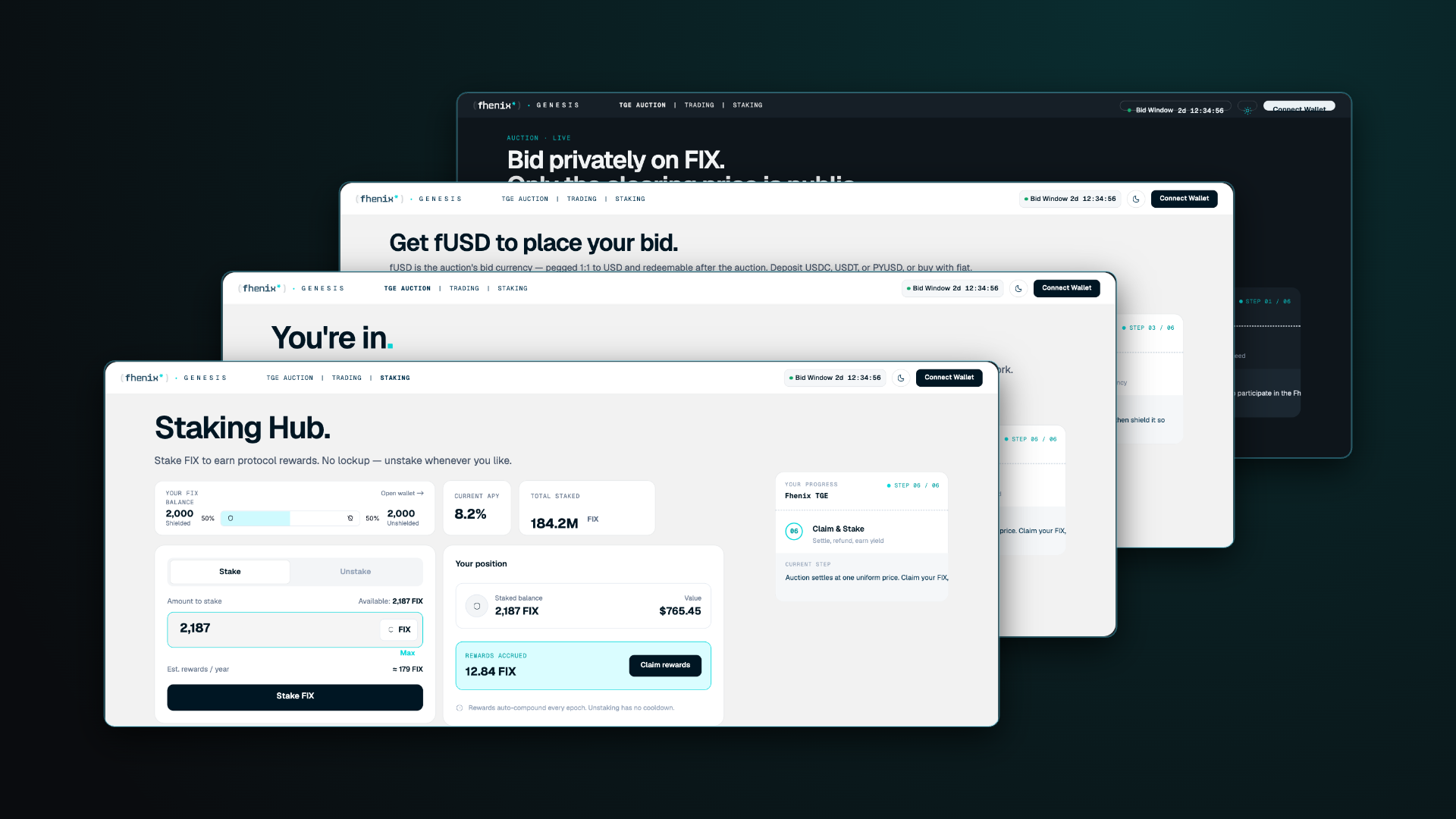
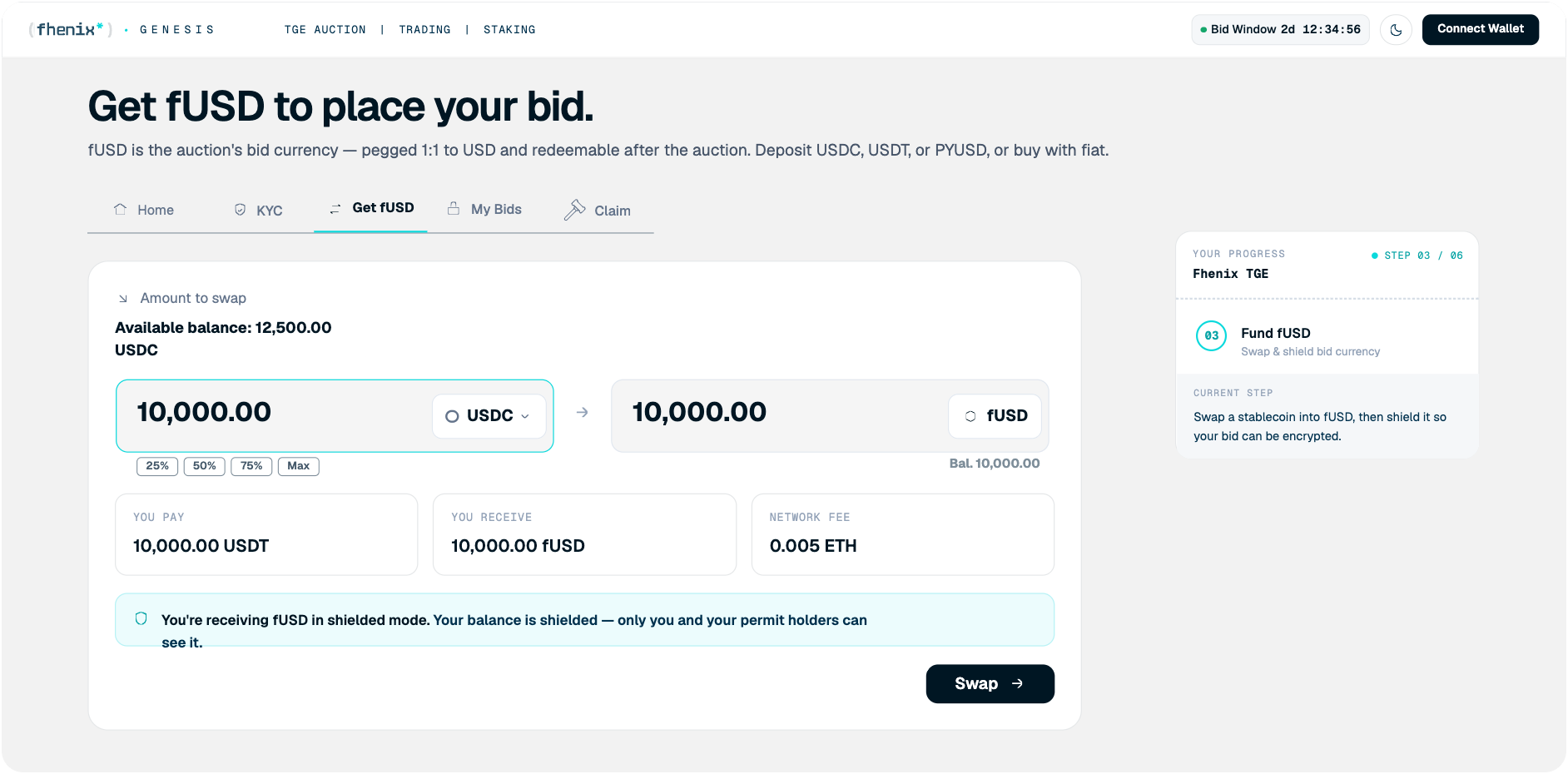
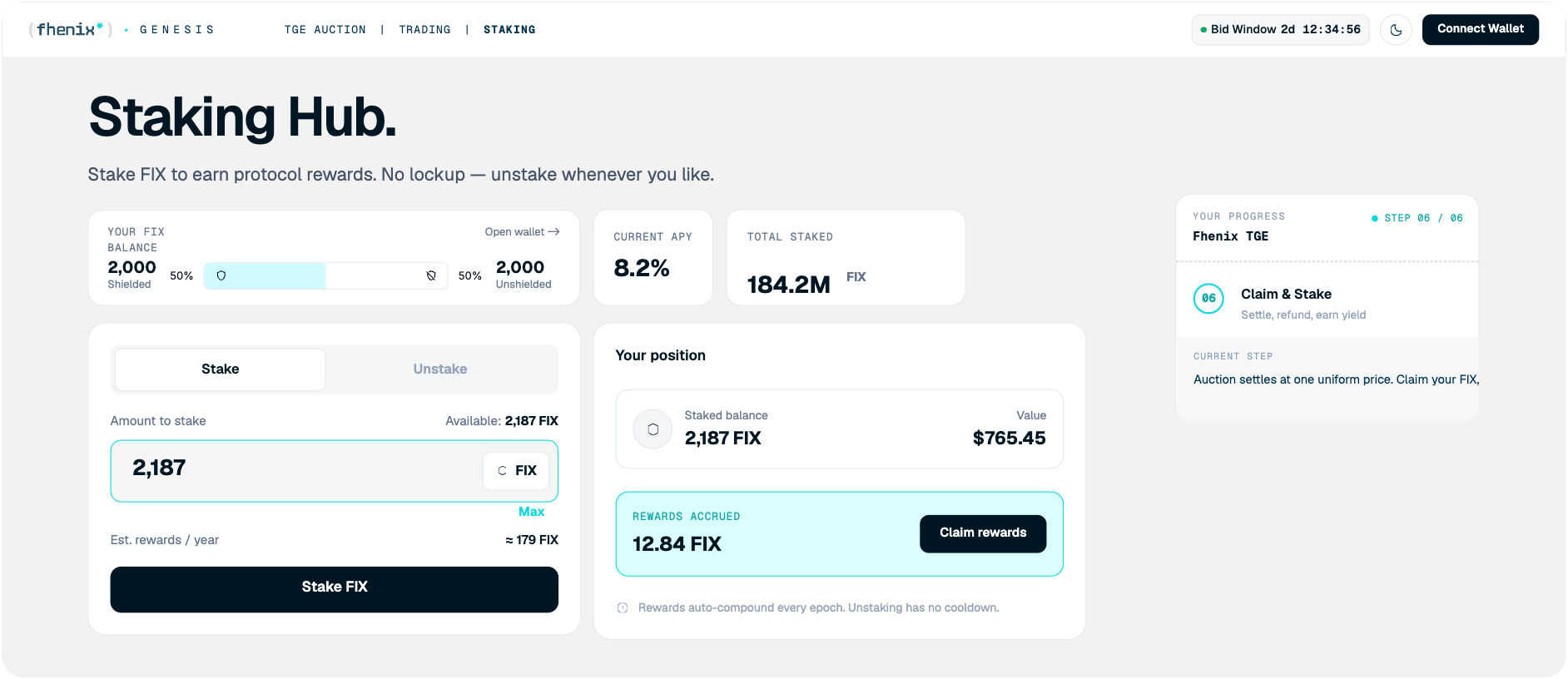
A token generation event with private bid auctions — amounts encrypted client-side via FHE, settlement at a single clearing price. Auction home, KYC, staking and fUSD swap in one product.
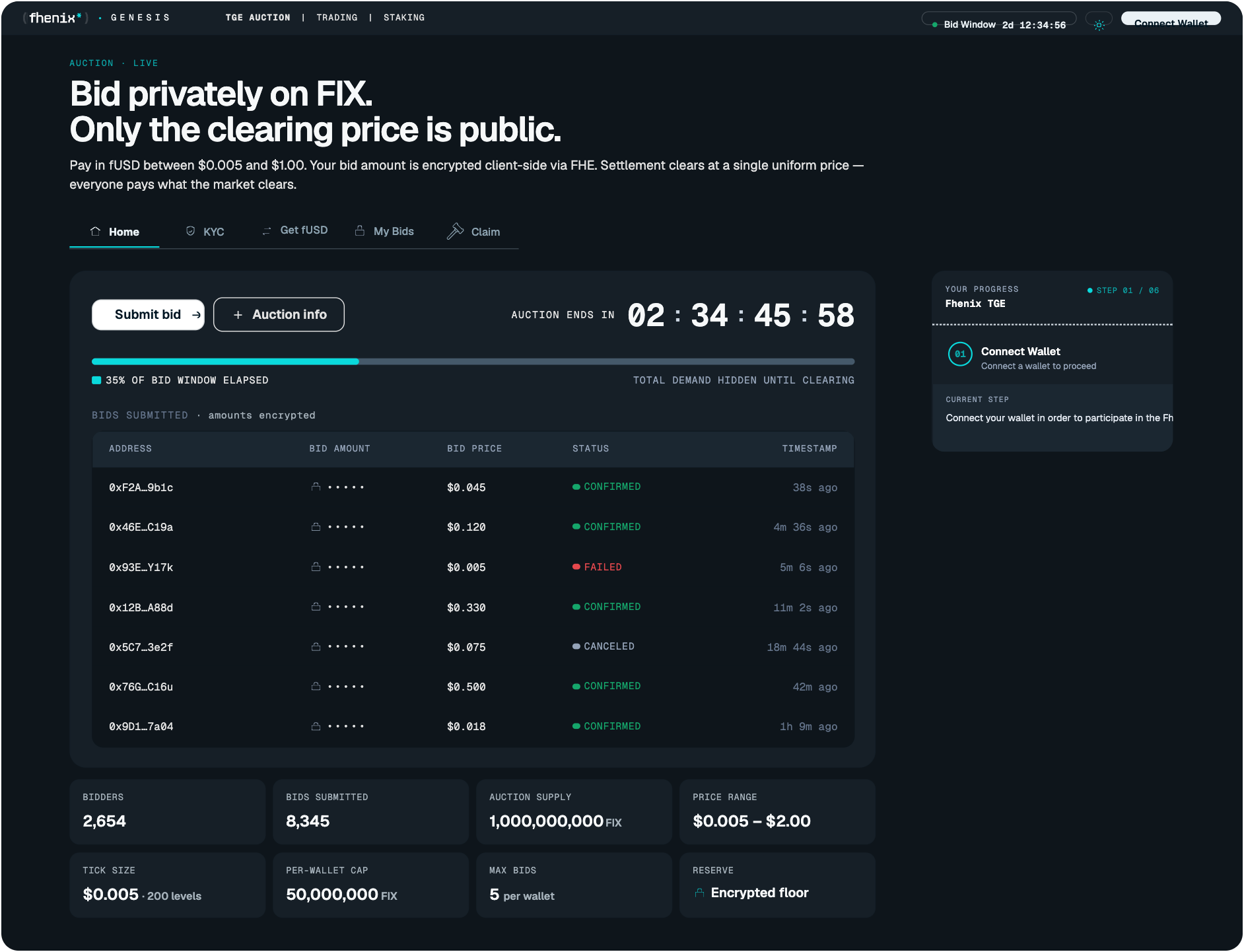
Public token auctions expose every bid, encouraging sniping and price games; privacy was needed without losing clearing transparency.
Bids encrypted client-side via FHE — only the clearing price is public. A guided flow from connect → KYC → fUSD → bid → claim.
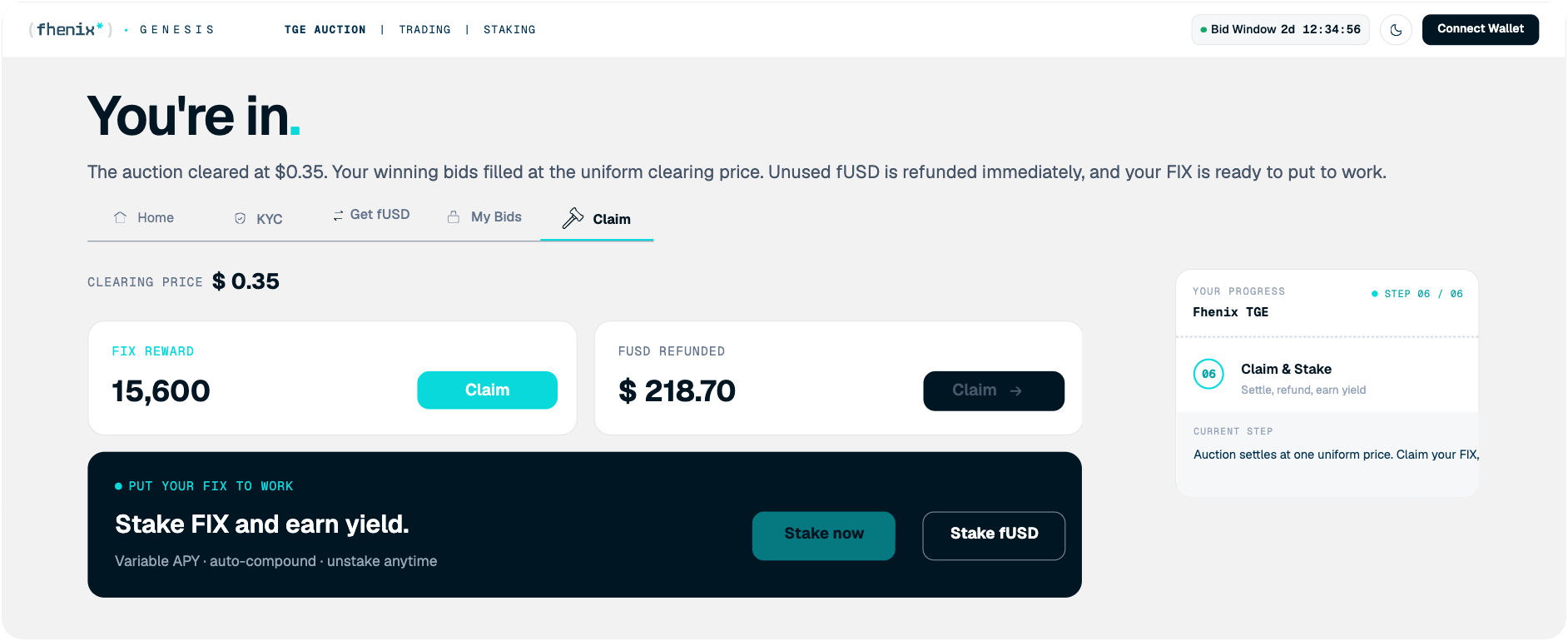
Uniform settlement price; side step-progress; legible bid states; coherent dark and light.
A complete TGE product — auction, staking, fUSD swap — ready for a confidential on-chain launch.
Three decisions that shaped the product — what the alternative was, and what each choice cost.
Uniform clearing price, not pay-as-bid
Pay-as-bid punishes the people who bid honestly: bid your true value and you pay more than the person who guessed the floor. With encrypted bids nobody can see the market to calibrate against, so pay-as-bid would have turned the auction into a blind guessing game. A single clearing price makes bidding your real number the rational move — which is the only way an encrypted auction produces a fair result.
Cost: the mechanism is harder to explain than "you pay what you bid", so the interface has to teach it before the first bid — a whole explanatory layer we would not have needed otherwise.
Encrypt in the browser, before anything leaves
Encrypting server-side would have been dramatically simpler to build and to debug. But it means the user has to trust us with the plaintext amount, and the entire promise of the product is that nobody — including us — sees their bid. Moving encryption into the browser makes the promise structural rather than a policy statement.
Cost: encryption takes visible seconds on lower-end devices. That wait had to become a designed, legible moment instead of a spinner, or it reads as a broken transaction.
One guided flow instead of a dashboard
A dashboard is the honest shape for a returning power user, but a TGE is something most people do exactly once, under time pressure, with real money, across four unfamiliar steps — connect, KYC, fUSD, bid. Every parallel entry point is another way to arrive at the bid screen unqualified and fail. The linear flow with side step-progress means the interface always answers "where am I and what is left".
Cost: returning users pay for it. Coming back just to claim means walking past steps already cleared, so completed states had to be collapsible and instantly re-enterable.
Open in the interactive portfolio →